Biomanufacturing Scale Up
Food Agriculture
Environment
Chemicals Materials
Bio Design
How Schmidt Sciences Is Building the Sensors Biomanufacturing Never Had
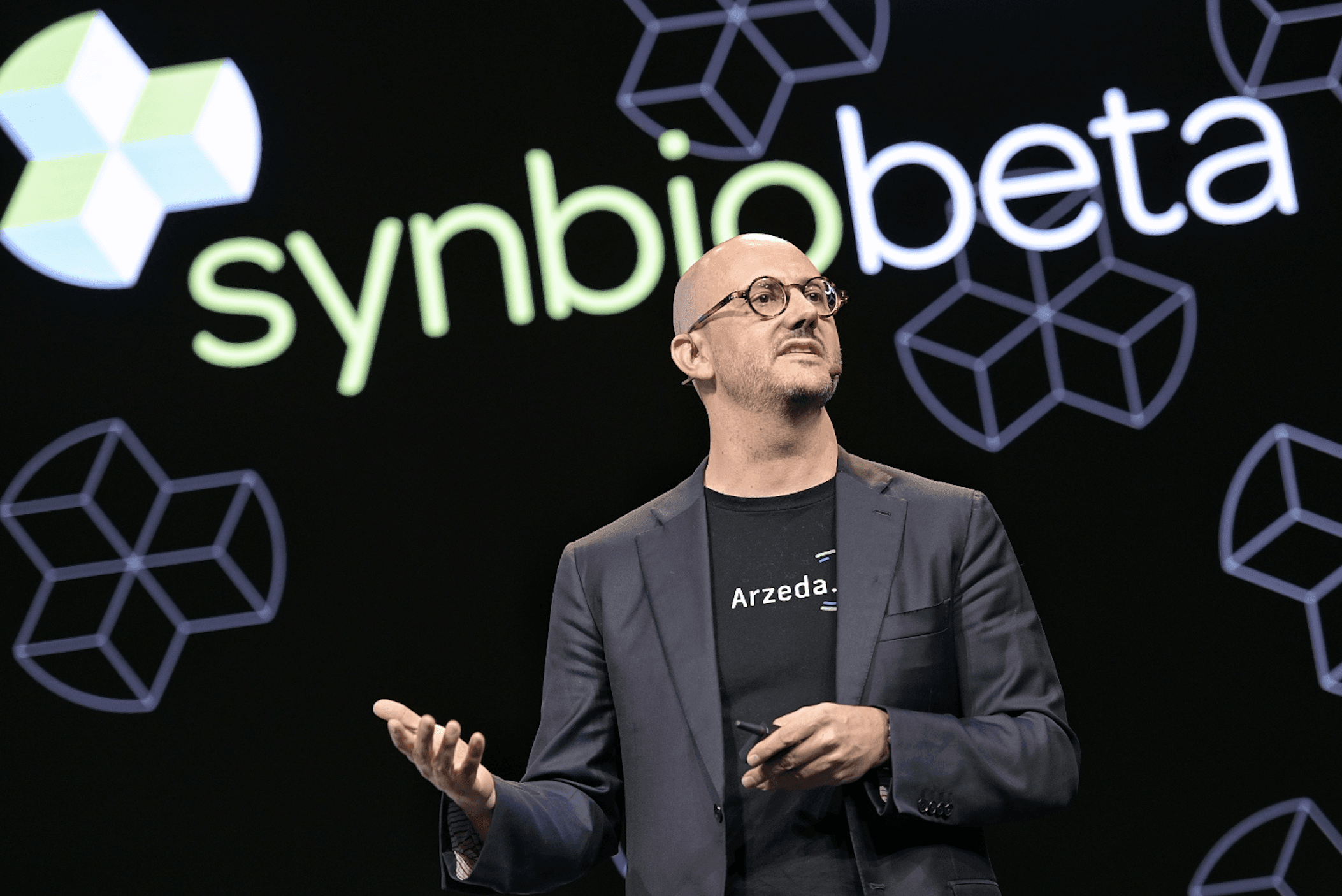
In 2022, Schmidt Sciences stood at SynBioBeta and named sensing as one of the biggest gaps holding back the bioeconomy. Four years later, they came back with the scientists they funded to solve it.
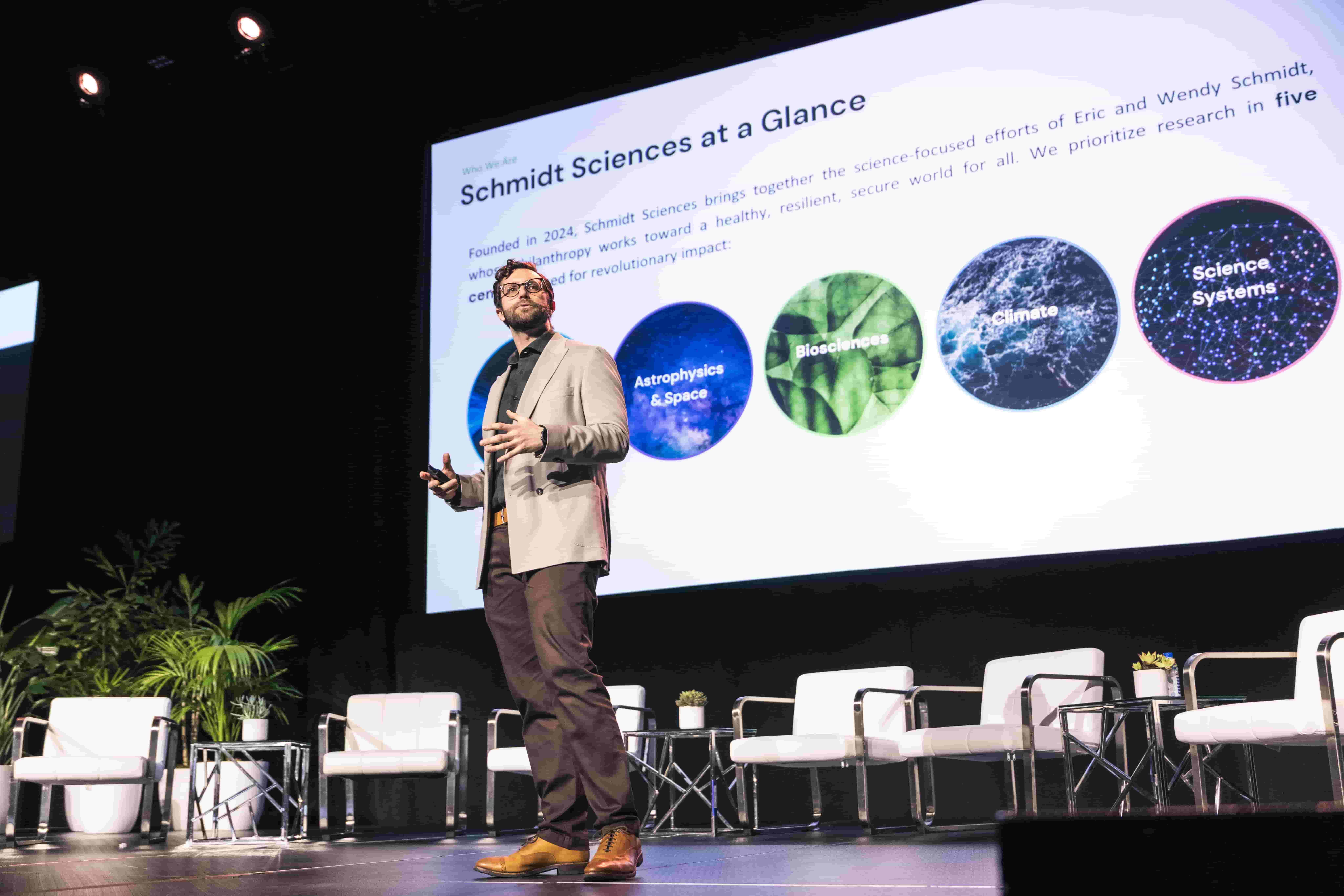
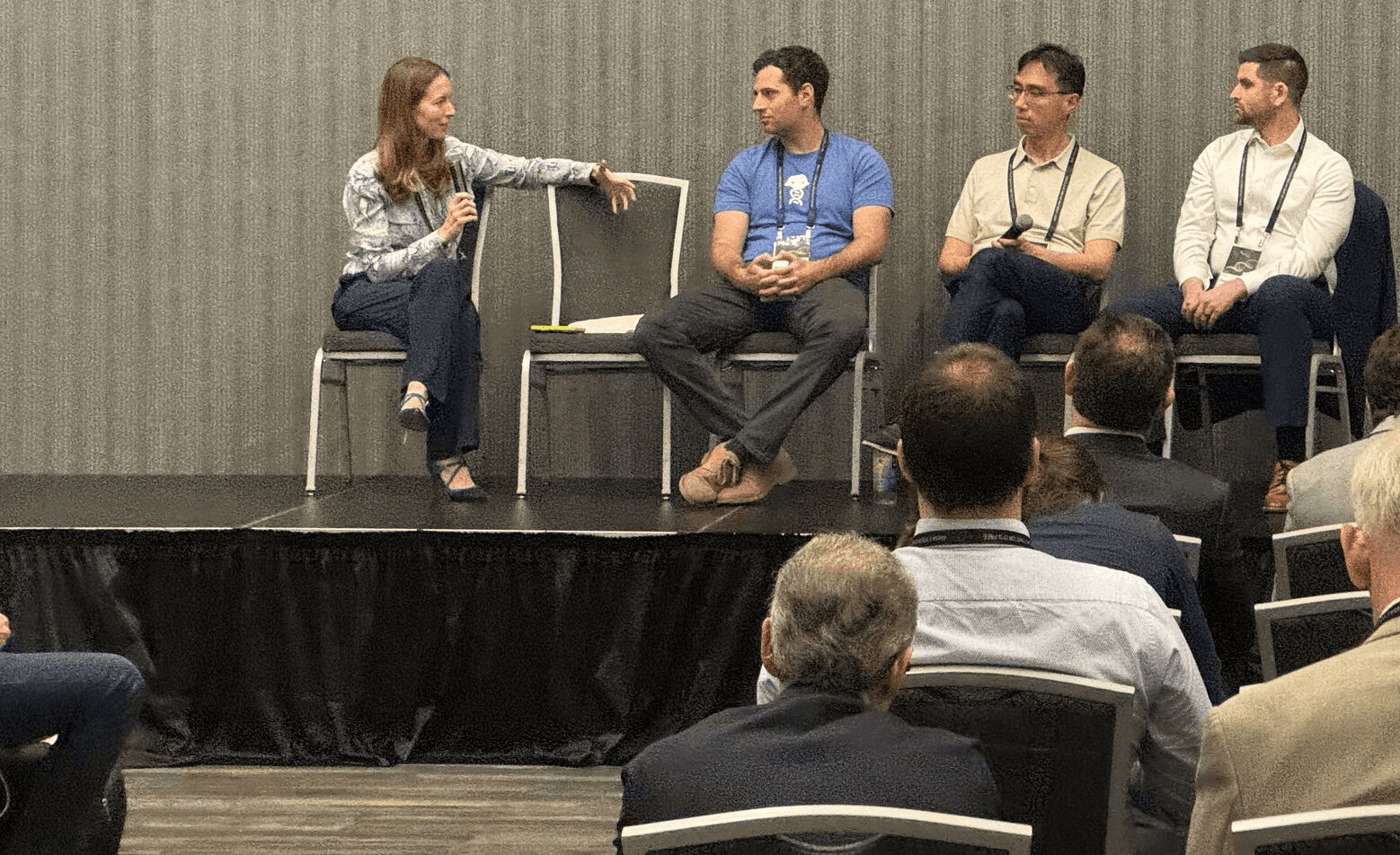
Something historic happened at SynBioBeta 2026. For the first time, the scientists building the next generation of bioreactor sensors were all in the same room and it was more diverse than you could possibly imagine. Quantum physicists, fermentation engineers, spectroscopy researchers; these were people who had spent careers in separate worlds, now sitting across from each other, finally speaking the same language.
It took years to get here. And it started at this conference.
In 2022, Schmidt Sciences stood at SynBioBeta and delivered a national strategy for the bioeconomy — a document that mapped the science and technology gaps standing between the promise of synthetic biology and industrial reality. Sensing was near the top of the list. Nobody was building specific tools for industrial manufacturing. The field was running on borrowed technology from pharmaceutical manufacturing, and it was showing.
The problem is fundamental. Almost every sensor used in industrial biomanufacturing today was designed for a different industry. Pharma has long optimized CHO cells and mammalian cultures, where regulatory frameworks demand validated, standardized equipment but gives you measures about the cellular environment, not the physiology of the cell. When that technology gets adapted for industrial biotech it fits poorly. You end up measuring what’s easy, not what matters.
“By the time you get your pH signal, it’s likely too late,” said Andrea Hodgson, who leads the biosciences team at Schmidt Sciences. “You can’t intervene. But here, maybe we can get that really early signal to prevent culture crashing.”
“By the time you get your pH signal, it’s likely too late. You can’t intervene.”
— Andrea Hodgson, Schmidt Sciences
Nobody in industry was going to rebuild this from scratch. The investment is too long-horizon, the return too uncertain, the risk too high. That’s exactly why Schmidt Sciences stepped in.
“Philanthropy can take risks,” Hodgson said. “We can be flexible. We can be more patient. We can push for faster timelines.”
“Philanthropy can take risks. We can do things government can’t do.”
— Andrea Hodgson, Schmidt Sciences
"The Sensors for Biomanufacturing" program is now Schmidt Sciences’ third major biosciences initiative (read more about the other Biosciences programs in the 2025 Schmidt Sciences Impact Report), and it reflects a model the organization has refined since that 2022 SynBioBeta strategy: community-informed philanthropy. Programs are designed not in isolation but in direct response to need. The sensing program spent its first year not funding research but convening research communities — getting physicists into rooms with fermentation scientists, helping them understand each other’s constraints and opportunities, co-developing the research agenda before a dollar of funding went out.
“All of our programs are designed with the voice of those who are in the target research community,” Hodgson said.
“All of our programs are designed with the voice of those who are the targeted research community.”
— Andrea Hodgson, Schmidt Sciences
The result is a portfolio of three sensing technologies, each purpose-built for industrial biomanufacturing, each chosen against a specific set of criteria: real-time, physiology-focused, industry-relevant, and platform-agnostic. The goal is not to measure what’s around the cell — temperature, pH, dissolved oxygen — but what’s happening inside it.
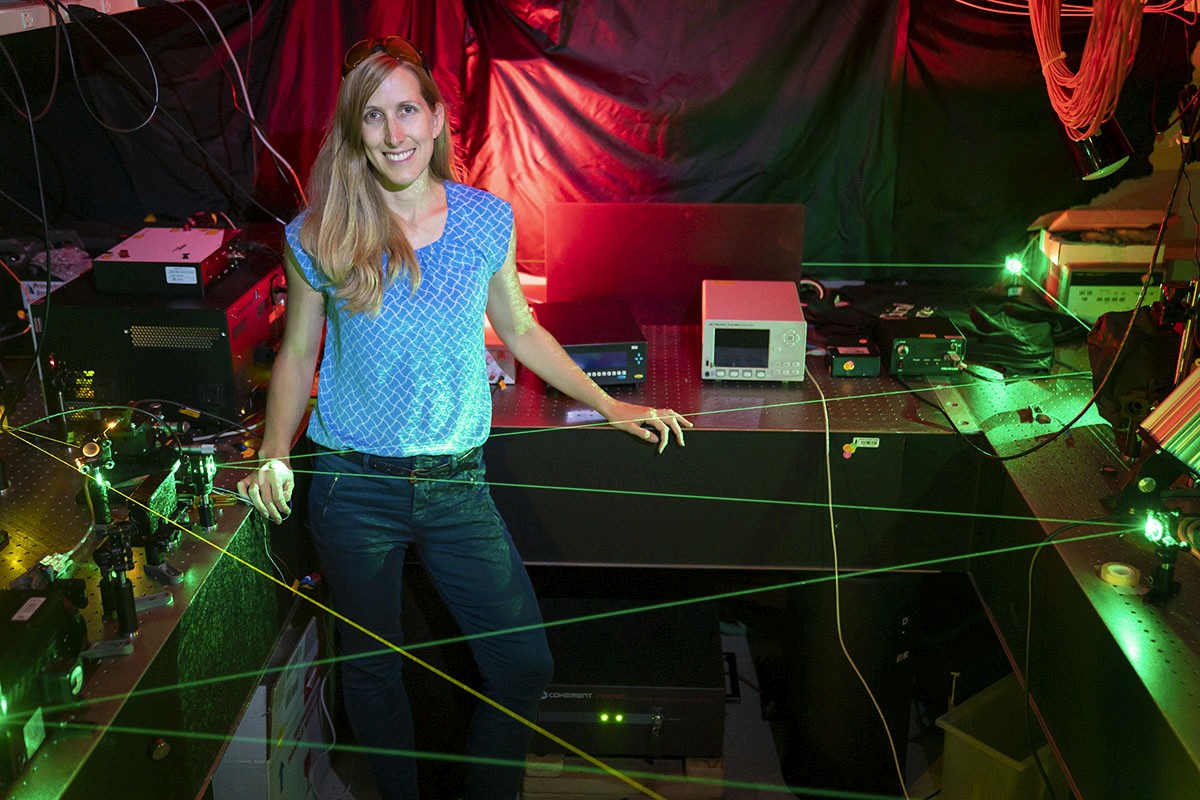
Fluorescent nanodiamonds are tiny quantum sensors that can be introduced into cell cultures and read pH, temperature, and free radical levels in real time — a direct window into cell stress that no conventional probe can access. Single-cell Raman spectroscopy fires a laser at individual cells and reads the scattered light back, revealing how a single cell’s physiology compares to the broader population — the kind of heterogeneity that bulk measurements miss entirely. And dual comb spectroscopy uses a precisely structured pattern of light to fingerprint the volatile compounds in a bioreactor’s off-gas, giving meaningful metabolic information without ever touching the culture itself. That team’s prototype just shipped to TU Delft for its first real bioreactor installation.
“We’re really measuring physiology of the cell,” Hodgson explained, “so that we could then develop correlations and models that would link the physiological state of the cell to productivity — something that is truly generalizable, universal, I dare say, for industrial biomanufacturing.”
“Something that is truly generalizable, universal, I dare say, for industrial biomanufacturing.”
— Andrea Hodgson, Schmidt Sciences
Every project has a data and modeling layer built in from day one. The endgame is closed-loop control: sensors feed models, models inform decisions, bioreactors that can see what’s happening can begin to manage themselves. The data these sensors produce is high-dimensional and complex, and making sense of it isn't just a matter of throwing machine learning at the problem. The real challenge is integration — fusing novel physiological readouts with the conventional process data bioreactors already generate, then designing the experiments that turn correlation into causation. Most of the industry doesn't yet have that infrastructure. The project teams are laying this foundation now, alongside the hardware itself, so that by the time the sensors mature, the framework to learn from them is already in place.
SynBioBeta 2026 was the moment the sensing PIs finally met in person. But Schmidt Sciences didn’t come just to mark the milestone. They came to ask what comes next — and they want to hear from the people who would actually use these tools.
A community survey is open now, designed to shape the next phase of the program. It covers scale-up failure modes, current sensing gaps, data infrastructure readiness, and what practitioners most wish they could measure in real time. It takes five minutes and closes June 30, 2026.
Read More
Newletter & More





SynBioBeta
Join the innovators shaping the future with SynBio + AI. From health to ag, materials & more—be part of the revolution.