Anthropic Is Hiring Biologists, Building Wet Labs, and Betting Big on Drug Discovery
At SynBioBeta 2026, the AI company's life sciences lead and Xaira's CEO laid out how far the field has come - and how much work remains.
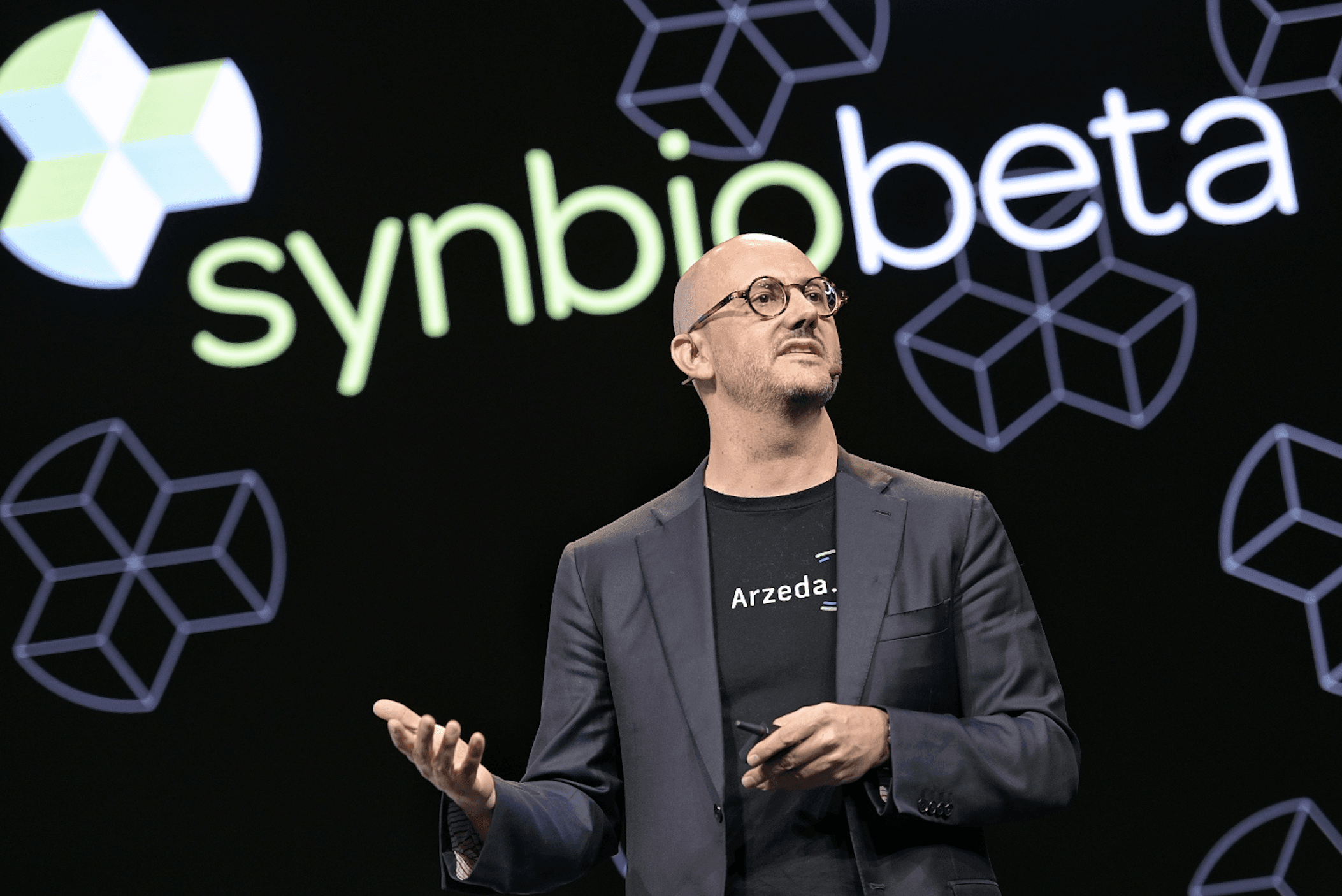
SAN JOSE, Calif. - Ten months ago, Eric Kauderer-Abrams left his job running a diagnostics startup to lead a team that barely existed. His new employer, Anthropic - the five-year-old AI company now pulling in $30 billion in annualized revenue - had decided that biology was the single most important place to put its technology to work.
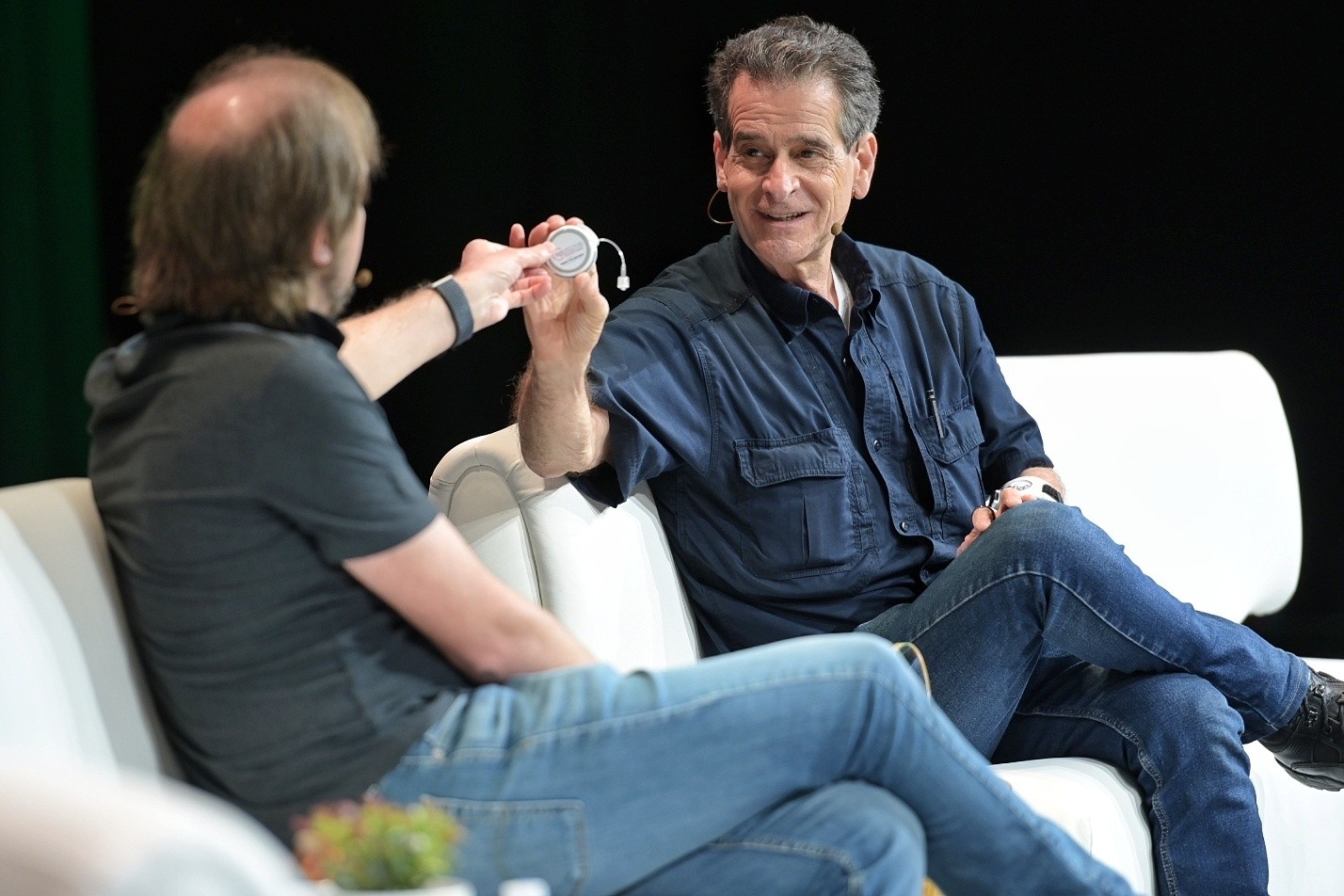
On Tuesday, at the SynBioBeta 2026 conference, Kauderer-Abrams sat down with Marc Tessier-Lavigne, the neuroscientist-turned-CEO of Xaira Therapeutics, for a frank conversation about what AI can actually do for drug discovery today, and where the hype still outpaces reality.
The short version: Anthropic wants to compress the entire R&D timeline in the life sciences by a factor of ten. It is training Claude, its large language model, on everything from structural biology to clinical regulatory filings. It has opened wet labs to run its own basic research. And last month, it acquired Coefficient Bio, an eight-month-old startup, to bring in expertise on the operational side of running biotech programs - choosing targets, selecting modalities, planning portfolios.
"Most of our effort is going into training Claude to be skilled and meet or exceed the performance of human experts in everything that you can imagine in biology and the life sciences," Kauderer-Abrams said. He described Opus 4.6 as the first Claude model to undergo extensive biology training, with subsequent releases ramping that work up significantly.
But he was also candid about the difficulty. Biology, he noted, doesn't lend itself to the clean problem-answer pairs that make training AI models on math or code comparatively straightforward. "Oftentimes, there is no single unambiguous source of truth that we could use as the training signal," he said. The team has had to develop new approaches to carving out training problems from biological data, where expert consensus exists but absolute ground truth often doesn't.
The State of AI-Designed Drugs
Tessier-Lavigne, who spent years leading research at Genentech and later served as Stanford's president before founding Xaira two years ago, offered a measured but optimistic assessment of where drug design stands.
He pointed to 2023 as a dividing line. Before that year, AI in drug discovery was mostly about tweaking molecules that already existed - multi-parameter optimization. Then David Baker's lab published work showing that entirely new proteins could be designed from scratch with high success rates. A year later, Baker demonstrated de novo antibody design and went on to share the Nobel Prize with the DeepMind group behind AlphaFold.
"At the time two years ago, when the paper was published, it was proof of concept, low success rates," Tessier-Lavigne said. "Fast-forward two years - a number of companies, including ours, and a number of academic groups have made a lot of progress in really industrializing this."
Companies can now generate antibodies against large fractions of tested targets with high affinity. The next step is moving from producing "hits" to producing leads with the developability properties needed to become actual drug candidates - stability, manufacturability, the full package. That requires more data and more training, but Tessier-Lavigne said the pace of progress has been fast.
He was less bullish on the dream of one-button drug design. "I don't think we're going to be pushing a button anytime soon to get that development candidate," he said. "But we're going to accelerate and empower our drug discovery efforts - to get those undruggable targets as well, which in some ways is the most exciting application."
Teaching AI to Understand Biology at a Causal Level
Beyond designing drugs, both speakers described a longer-term ambition: building AI models that understand biology the way an engineer understands a circuit - causally.
Xaira's approach involves perturbing cells and organoids with single-gene knockouts, chemical treatments, and growth factors, then measuring the outcomes with transcriptomics, proteomics, and other readouts. Feed enough of that data to a model, and it starts to generalize. It can predict what happens when you modify two or three genes, or when you move into a different cell type it hasn't seen before.
"The idea is to have causal AI models," Tessier-Lavigne said. Xaira published a paper last month laying a foundation with 16 different cellular contexts, and is now moving into more therapeutically relevant tissues.
The ultimate payoff, he argued, is in matching drugs to patients. Two-thirds of clinical drug failures happen because the right patients can't be identified - the target and the drug work, but the responders can't be found. Causal AI models trained on the right biological data, combined with deep phenotyping of disease tissue, could change that math.
The Safety Question
Kauderer-Abrams acknowledged the dual-use nature of the capabilities Anthropic is building. A model that gets better at designing complex therapeutic molecules is also a model that develops dangerous knowledge.
"We need to put the same amount of work into the safeguards and the responsible deployment of our models as we do into building the capabilities," he said, describing classifiers that detect harmful intent in incoming requests and access controls under development. He framed it as an open-ended process with no finish line.
What to Watch
The conversation left a clear impression: the convergence of large language models and biological data is producing real, measurable progress, particularly in protein and antibody design. But the harder problems - training models on ambiguous biological ground truth, building causal understanding of disease, identifying the right patients for the right drugs - are still in early innings.
Anthropic's bet is that its foundation model approach, combined with wet-lab feedback loops and biotech operational expertise, can compress timelines across the board. Whether that ten-fold acceleration materializes will depend on how fast the training data problems get solved, and whether the models can learn to go beyond human knowledge by closing the loop with experimental results.
Both speakers agreed on the most exciting near-term target: making the undruggable druggable. If AI can open doors that chemistry alone cannot, patients who currently have no options stand to benefit first.
This fireside chat took place at SynBioBeta 2026, the annual gathering of the synthetic biology community, held May 4–7 in San Jose, California. SynBioBeta 2027 dates and tickets will be available at synbiobeta.com. Early registration is recommended.
Read More
Newletter & More




SynBioBeta
Join the innovators shaping the future with SynBio + AI. From health to ag, materials & more—be part of the revolution.